Protect Your Privacy. Secure Your Finances. Explore the Future of Cybersecurity.

How AI is Fighting (and Creating) Cyber Threats
Marty Olo
10/19/2025
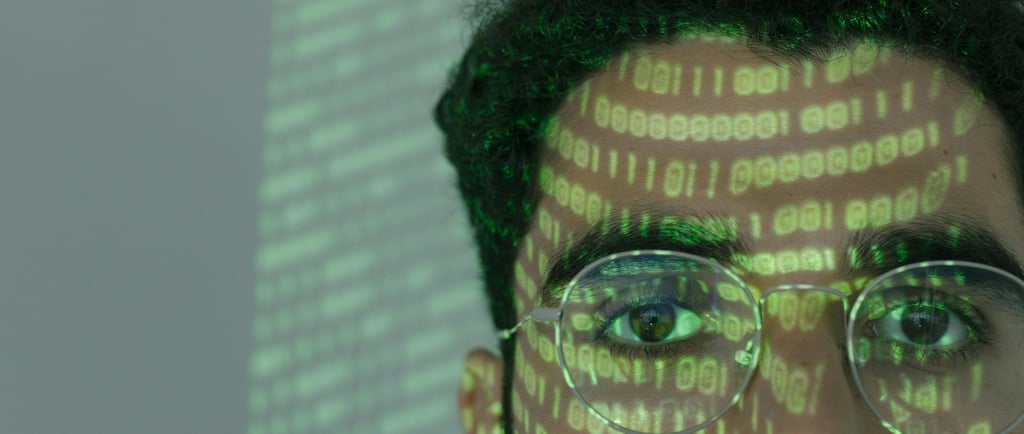
Artificial Intelligence (AI) is reshaping cybersecurity—but not always for the better. On one hand, AI powers advanced threat detection, automated defenses, and predictive intelligence. On the other hand, cybercriminals are leveraging AI to create deepfakes, AI-generated scams, prompt injection attacks, and automated malware.
In this post, we explore how AI is transforming both sides of the cybersecurity battle and how organizations can stay protected in this fast-evolving digital landscape.
How AI Is Creating New Cyber Threats
1. Deepfakes and AI-Generated Scams
AI can produce hyper-realistic voices, videos, and photos, making impersonation easier than ever. Attackers use deepfakes to pose as executives, colleagues, or financial advisors, tricking victims into transferring funds or revealing sensitive data.
Recent studies indicate that over 70% of adults struggle to distinguish real messages from AI-generated phishing attempts.
2. Prompt Injection and Data Leaks
As AI tools integrate into daily business workflows, prompt injection attacks are on the rise. These involve hidden commands designed to trick AI models into leaking confidential information or performing unintended actions.
Example: A malicious email could contain a hidden prompt that instructs an AI-powered inbox assistant to forward private messages or modify files without the user’s consent.
3. AI-Driven Malware and Automated Hacking
Hackers now leverage AI to scan for vulnerabilities, generate polymorphic malware, and evade traditional detection methods. These attacks evolve faster than standard antivirus tools can respond, forcing security teams to adopt AI-powered defenses to keep pace.
How AI Is Fighting Back
1. Smart Threat Detection Systems
AI can analyze billions of data points in real time to detect anomalies, phishing campaigns, and zero-day exploits before they cause damage.
Example: DeepMind’s CodeMender identifies and patches security holes in open-source projects often before attackers even discover them.
2. AI-Powered Cybersecurity Suites
Telecom and tech providers are launching AI-driven safety tools to protect consumers and enterprises alike. For instance, Vi Protect uses machine learning to detect scams, fraud attempts, and spam in real time—showing that AI security solutions aren’t limited to large corporations.
3. Predictive Threat Intelligence
Modern AI systems can anticipate attacks by analyzing network traffic, user behavior, and dark web activity. This proactive intelligence helps organizations prepare and defend against threats before they reach critical systems, making cybersecurity both faster and more predictive.
The Dual Role of AI in Cybersecurity
AI acts as both a weapon and a shield. As technology grows more sophisticated, attackers craft smarter exploits while defenders deploy stronger detection systems.
To stay secure in 2025 and beyond, cybersecurity teams should:
Use AI monitoring tools with ethical oversight and transparency
Train employees on emerging threats like deepfakes and AI-generated scams
Implement multi-factor authentication (MFA) across all systems
Keep AI-powered applications updated and patched regularly
Final Thoughts: Balancing Innovation with Security
AI is no longer optional in cybersecurity—it’s essential. The same technology that enables attackers to automate scams is also safeguarding millions of users worldwide.
The challenge lies in staying ahead: adapting quickly, combining AI with human oversight, and deploying tools responsibly. With the right balance, AI can remain humanity’s greatest cybersecurity ally instead of its most dangerous threat.
Stay Secure, Stay Informed
Your source for online privacy and protection.
Copyright © 2026. - PrivyShield - All rights reserved.